Dec 162016
 

Gingko biloba (maidenhair tree)
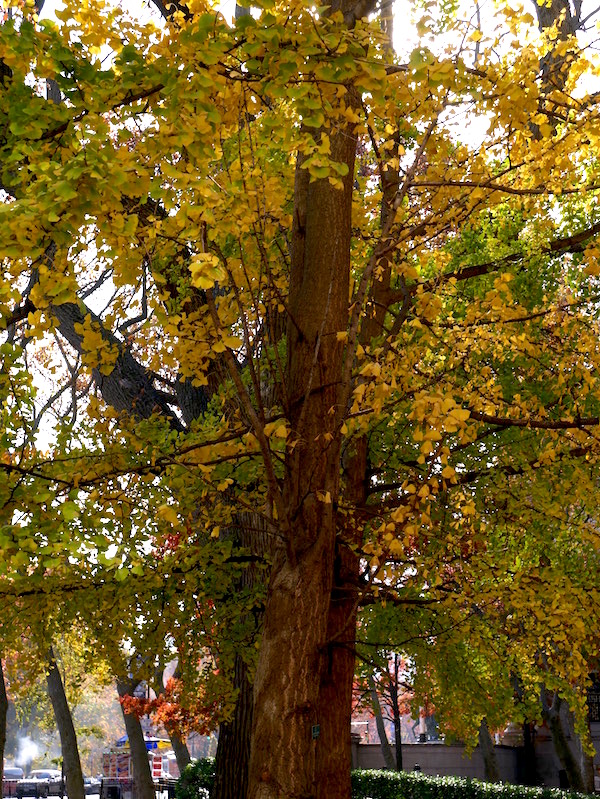
Gingko biloba, native to China, is one of the most beautiful trees in Roosevelt Park. In fall, the fan-shaped leaves turn a spectacular yellow color.

Ancient trees

Maidenhair trees have been called a “living fossil.” They are the sole survivor of a group of trees dating back more than 200 million years. Maidenhair trees can live to extreme old age; the oldest recorded tree is 3,500 years old.

Medical Uses of Gingko biloba

Chinese medicine has used the leaves of the maidenhair tree for a variety of disorders. Flavonoids and terpenoids in the plant are believed to be the cause of medical effects.

Scientists have recently conducted studies using standardized extracts from dried Gingko biloba leaves to evaluate whether it is effective for treating conditions that include dementia, macular degeneration, glaucoma and PMS. The seeds of the tree can sometimes be toxic.
 December 16, 2016  Comments Off on Maidenhair tree
Dec 152016
 

Hydrangea quercifolia (oak leaf hydrangea)
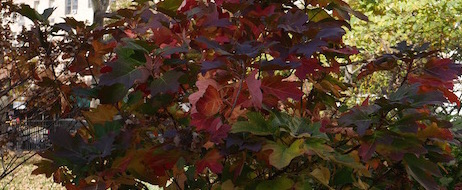
Hydrangea quercifolia is native to the United States, and well-suited to the growing conditions in Roosevelt Park. The oak leaf hydrangea can grow under direct sun for limited periods, but prefers dappled sun and partial shade. It is fairly drought tolerant.

Fall Foliage

In spring and early summer it produces panicles of greenish-white flowers that change over time to light pink and brown color as the flowers age. In fall, the large, oak-like leaves can turn beautiful shades of burgundy, red, orange and yellow.

 December 15, 2016  Comments Off on Oak Leaf Hydrangea
Nov 152016
 

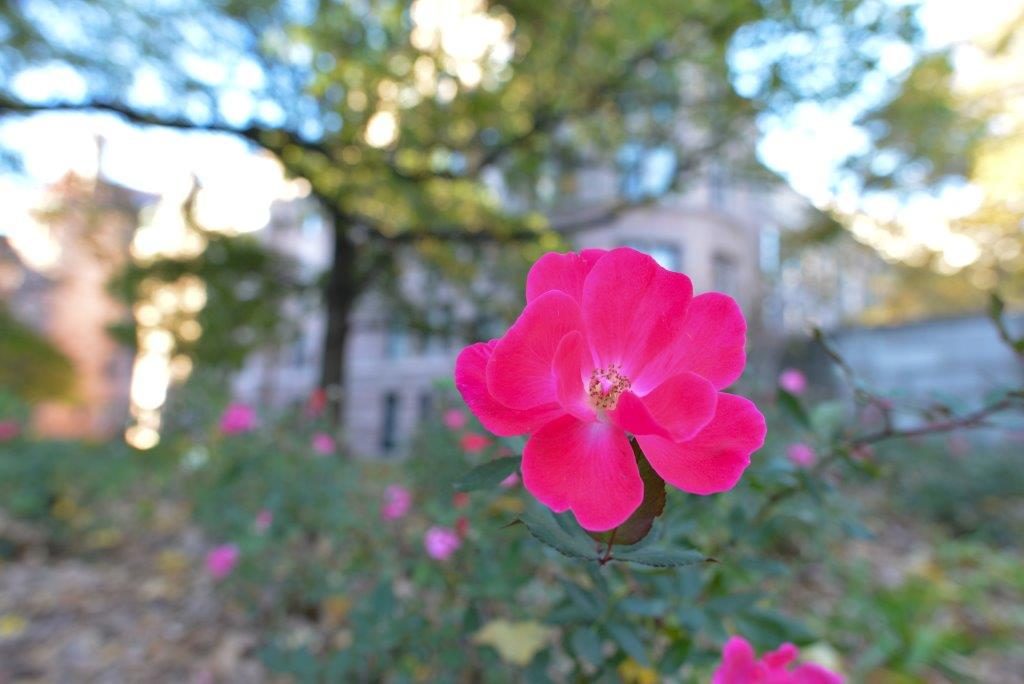
Theodore Roosevelt Park welcomes the Knock Out® Rose to our new corner garden at 77th St. and Central Park West.

df_161104-0107

Rose breeder Bill Radler created the Knock-Out® rose in 2000. Blooming every five to six weeks from spring to frost, this beautiful, fragrant rose comes in colors of red, yellow and pink. It is cold-hardy, disease-resistant and grows to a height of three to four feet. Grown under full sun to light shade, in fertile, well-drained soil, it is drought tolerant once established.

 November 15, 2016  Comments Off on Roses blooming in November!
Sep 252016
 

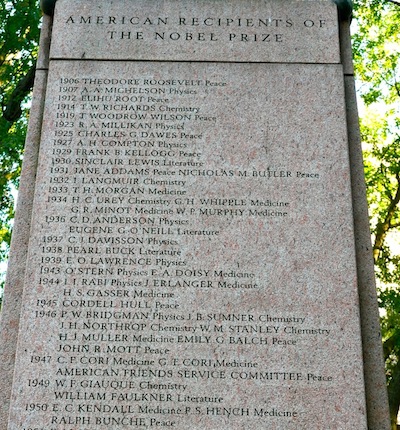
faulkner-nobel-monumentWilliam Faulkner was born on September 25, 1897, and he won the Nobel Prize in Literature in 1949. Faulkner’s name appears on the Nobel Monument in Roosevelt Park.
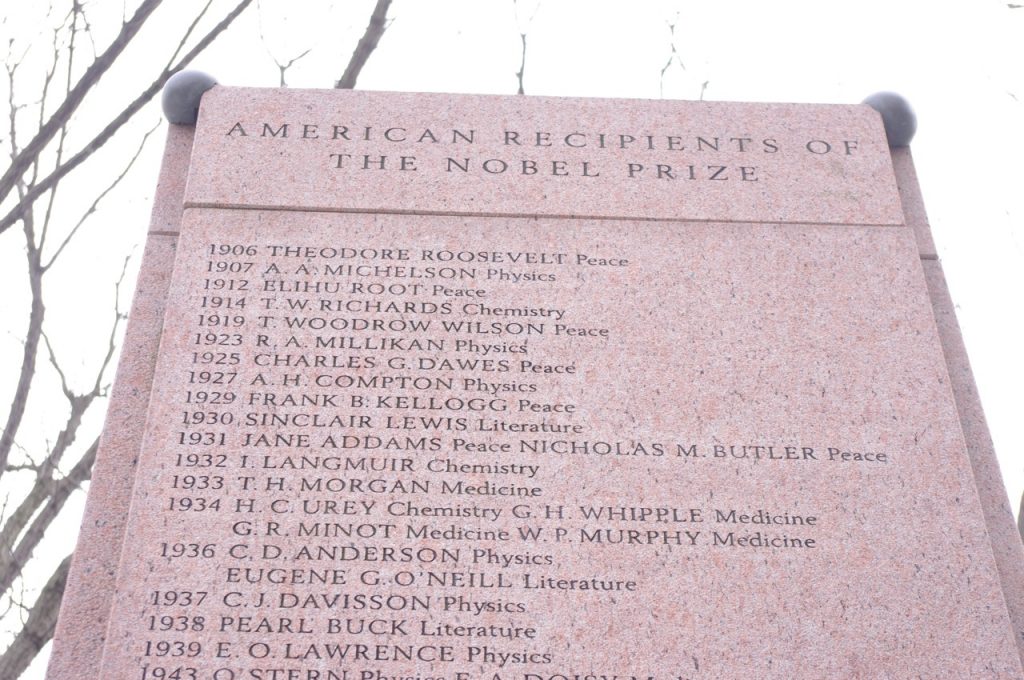
Faulkner was born in Mississippi, and he joined the RAF during World War 1. He later studied at the University of Mississippi, where he published work in the student newspaper. He dropped out before earning a degree.


Time in New York City

Faulkner moved to New York City in 1921, and he worked in a bookstore. If he ever visited the Museum of Natural History, he would have walked through the park that eventually became Theodore Roosevelt Park. Faulkner returned to Mississippi in 1922.


 September 25, 2016  Comments Off on Nobel Laureate William Faulkner
Sep 022016
 

Nobel monument Roosevelt ParkCarl D. Anderson was born in New York City on September 3, 1905. In 1936, he won the Nobel Prize in physics for his discovery of the positron, the first antiparticle proven to exist.
 September 2, 2016  Comments Off on Nobel laureate Carl D. Anderson
Aug 282016
 

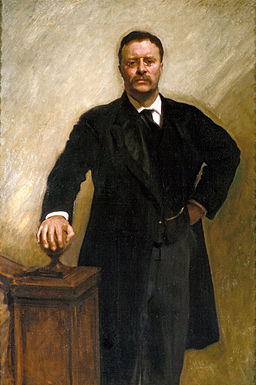
Theodore Roosevelt by John Singer Sargent, 1903Labor Day

Labor Day started in the 1880’s, when individual states began passing legislation to create a holiday to honor workers. In 1894, Congress made the first Monday in September a legal holiday, Labor Day.

Theodore Roosevelt’s Labor Day speech

In 1903, President Theodore Roosevelt, Roosevelt Park’s namesake, gave a speech that linked the prosperity of laborers to the prosperity of the entire country. He said, “If circumstances are such that thrift, energy, industry, and forethought enable the farmer, the tiller of the soil, on the one hand, and the wage-worker on the other, to keep themselves, their wives, and their children in reasonable comfort, then the State is well off, and we can be assured that the other classes in the community will likewise prosper. On the other hand, if there is in the long run a lack of prosperity among the two classes named, then all other prosperity is sure to be more seeming than real.”


 August 28, 2016  Comments Off on Labor Day
Jul 202016
 
mann on Nobel monumentRoald Hoffman was born on July 21, 1937. He is one of the Nobel Prize winners whose name appears on the Nobel monument in Roosevelt Park.
Time in New York City

Hoffmann was born in Poland. After surviving the Holocaust, he moved with his mother to New York City. He studied at P.S. 93 and P.S. 16 in Brooklyn, and he graduated from Stuyvesant High School and Columbia University.

Chemistry and Poetry

Hoffmann received a PhD in chemistry from Harvard in 1962, and he was awarded the Nobel Prize in Chemistry in 1981, sharing the prize with Kenichi Fukui.

He taught chemistry at Cornell, wrote books and scientific papers, and participated in a television series, “The World of Chemistry.” Hoffmann published his first poem in 1984. He later published six collections of poetry, “The Metamict State,” and “Gaps and Verges,” “Memory Effects,” “Solition,” “Catalista: Poemas Escogidos,” and “Roald Hoffmann Izbrannie Stichotvorenia.”


 July 20, 2016  Comments Off on Nobel laureate Roald Hoffmann
Jun 192016
 

Rhododendrons, hydrangeas and day lilies are just some of the flowers you can see in Roosevelt Park.

 June 19, 2016  Comments Off on June flowers in Roosevelt Park
Jun 192016
 

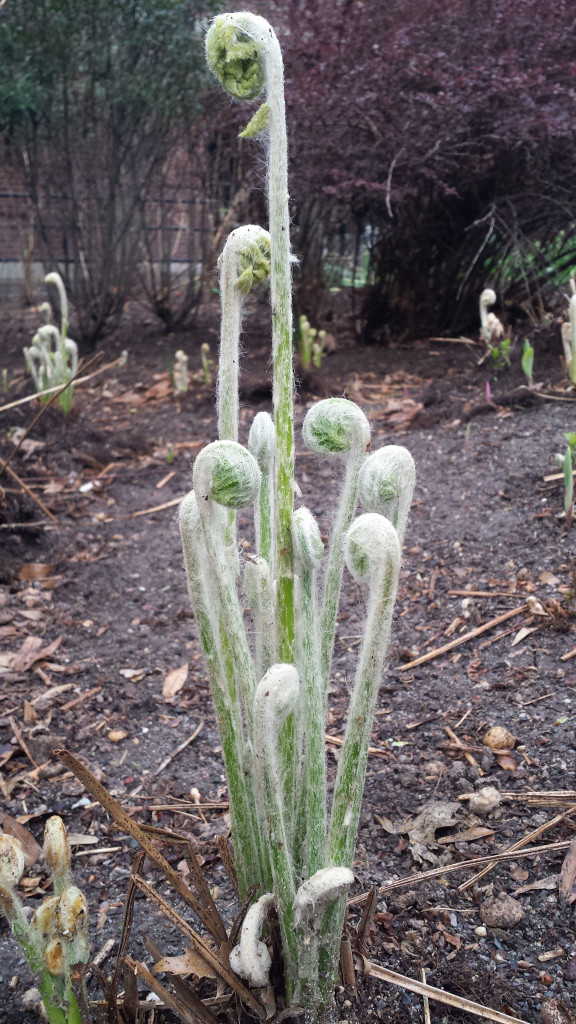
Cinnamon Fern

This cinnamon fern is in the fiddlehead state. Just one of the many species of flora in Theodore Roosevelt Park.


theodore roosevelt park plant_300

 June 19, 2016  Comments Off on Name This Plant
Jun 012016
 
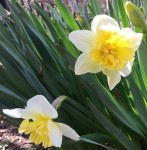
daffodils in Roosevelt Park

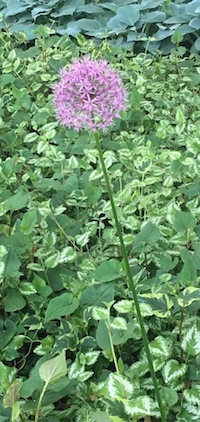
Allium in Roosevelt ParkPurple Sensation allium

Onions, shallots and garlic are all alliums, but not all members of the allium family are likely to be recipe ingredients. There are more than 700 varieties of allium, and some are quite beautiful. The Purple Sensation is named after its purple globes of flowers. This variety usually grows to be 24 to 30 inches tall.

Few animals like raw onions

Because they all have a sharp taste like onions, alliums are not usually eaten by rodents or deer. Alliums do well in full sunlight, but they can tolerate shade. They don’t need a lot of water, and they do best in well-drained soil.

Plant alliums in the fall and enjoy them for years

Allium bulbs are planted in the fall so they have time to grow roots in temperatures that are cool, but not freezing. They usually bloom in late spring to early summer. They are long-lived perennials, and some alliums can reappear annually for more than a decade.


 June 1, 2016  Comments Off on Purple Sensation Alliums